Automotive Combination Lamp Adjuster Bracket Mold Solution: The 0.5mm Warpage Issue You Must Calculate Before Cutting Steel
Product Requirements
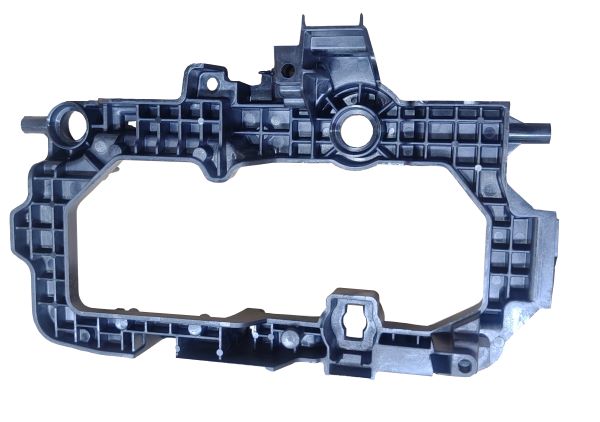
This time we were tasked with building a mold for an automotive combination lamp adjuster bracket. The part has numerous ribs and high protruding features on the sides. The customer's warpage requirement is 0.5 mm.
Anyone in automotive lighting procurement knows what this requirement means. PBT with glass fiber is already difficult to control in terms of shrinkage. Add dense ribs and side protrusions, and you have several factors stacking together—0.5 mm tolerance leaves zero room for trial and error. We've been burned before: the mold was cut, T1 came out with excessive warpage, the steel had to be reworked, and the project timeline slipped. So this time, when the inquiry came in, we clearly specified the warpage requirement and critical dimensions, and first checked whether the mold maker could provide a solution before cutting steel.
Product Overview
Hard plastic material: PBT GF50. Surface finish: glossy. Dimensions: 176 × 262 × 106 mm. Wall thickness: 2.3 mm. Mold cavitation: 1+1.
Laying out these parameters makes the challenges clear. PBT filled with 50% glass fiber has a shrinkage rate heavily influenced by fiber orientation. A wall thickness of 2.3 mm makes it a thin-wall part, and rapid cooling combined with uneven shrinkage directly amplifies warpage. The 1+1 cavity layout means two parts per shot, and both cavities must have identical cooling conditions—otherwise the two parts will have conflicting warpage values. These factors combined represent the true difficulty of this mold.
Mold Solution
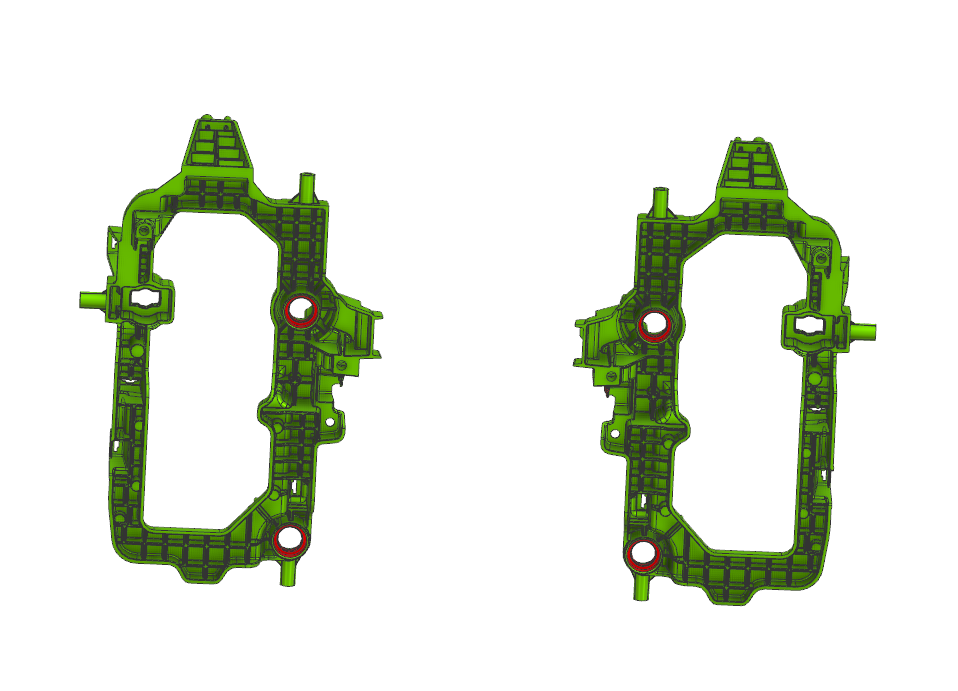
To meet the stringent warpage requirement, Tianjin Xuansheng Technology performed detailed mold flow analysis before mold manufacturing, starting with determining the gate location. They did not simply cut steel based on past experience; instead, they ran simulations of melt flow, glass fiber orientation, and fill sequence in each region. The gate location directly determines how filling pressure is distributed and where internal stresses are locked in. If the gate is wrong, no amount of cooling circuit adjustment later can suppress warpage.
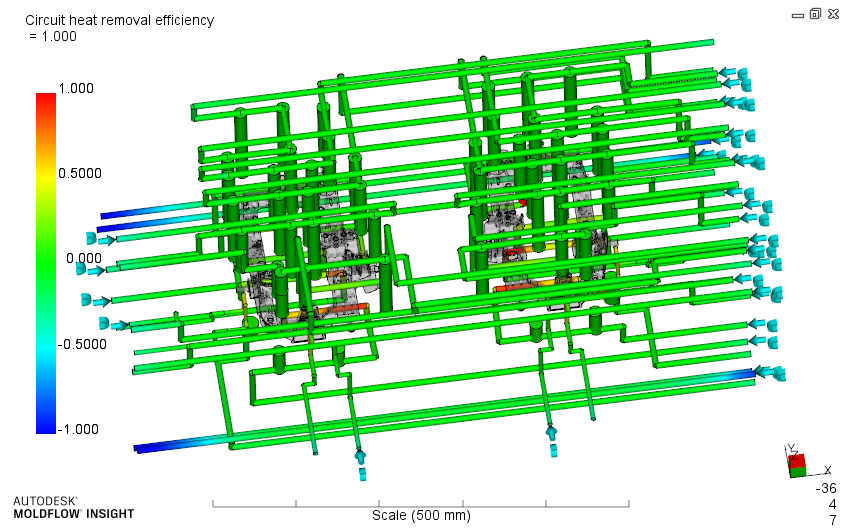
The mold flow analysis also predicted high-temperature zones during molding. Targeted cooling circuits were designed for these zones during the mold design phase, with denser cooling channels arranged in those areas to ensure uniform mold cooling. Uniform mold temperature leads to uniform shrinkage—this is fundamental to achieving the 0.5 mm warpage requirement.
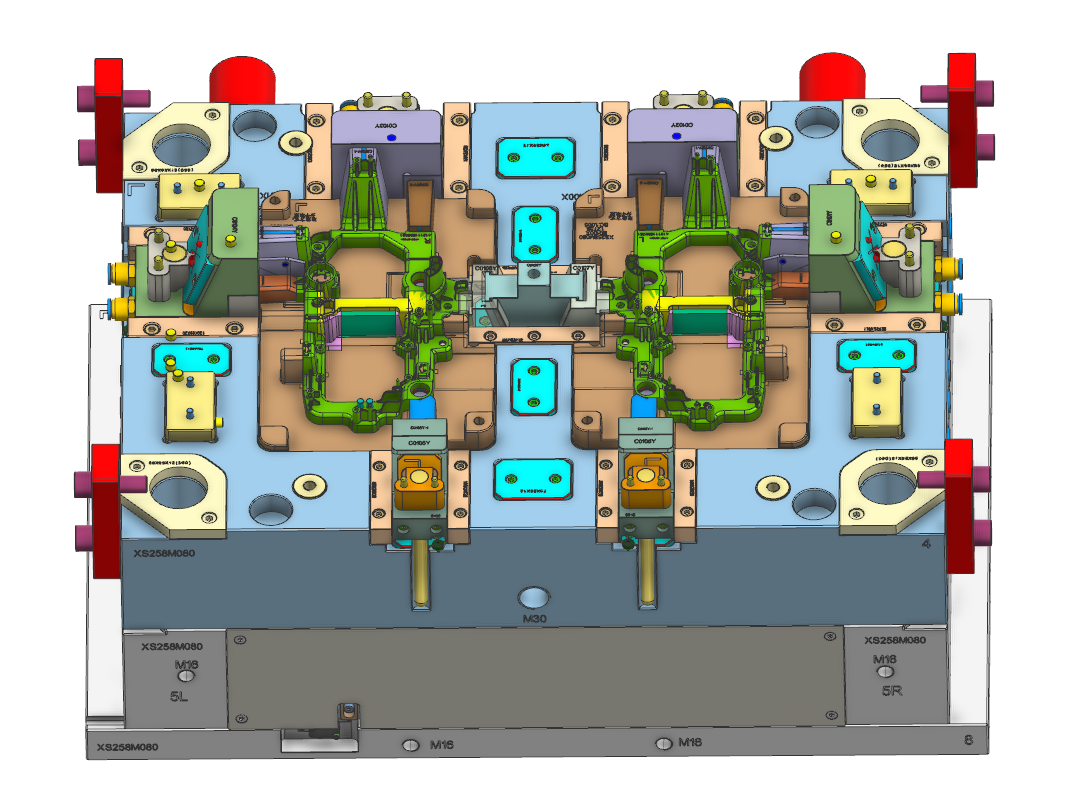
The core side of the mold uses inserts throughout to address the challenges of numerous ribs, difficult machining, and air entrapment. The ribs on this part are dense. If the core side were milled from a single block of steel, machining time would be long and air would easily be trapped at the rib ends. With an insert structure, the ribs are machined separately, and the clearance between inserts serves as venting channels. Air entrapment is solved structurally, without relying on later process adjustments.
For the high protruding features on the sides, a delayed ejection mechanism on the slide was adopted to solve the demolding issue. If conventional ejection were used at the side protrusions, the part could easily be scratched or dragged. Xuansheng linked the side core-pulling and ejection actions: the slide retracts first, then the ejector pins move. The protruding features are demolded with uniform force, leaving no ejector marks on the part surface.
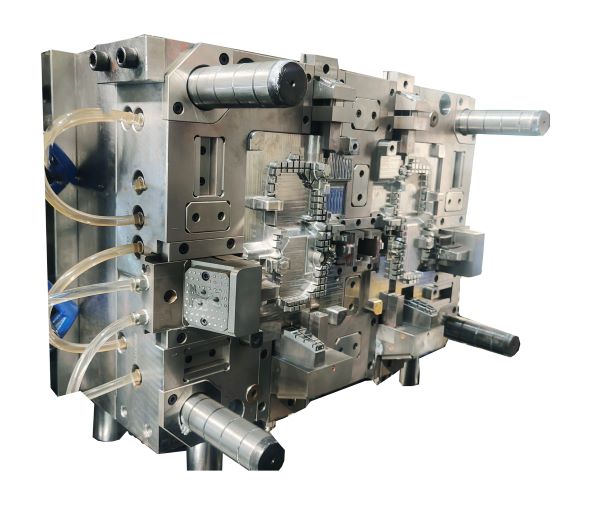
Results
Every detail of the mold was well executed from design to manufacturing. At the T1 trial, the full dimensional report and warpage inspection were both within the tolerances we specified. The mold achieved mass production readiness at T1, with no secondary mold modifications throughout the process.
As procurement professionals, the last thing we want to hear from a supplier is "No problem, we can definitely do it." This time, what we received was a mold flow analysis report, a complete cooling circuit plan, and actual measured data from T1. These are things we can take to our customers and project managers—far more tangible than any verbal promise.
Tianjin Xuansheng Technology manufactures precision injection molds for automotive lighting applications. From mold design to machining, everything is done in-house—no outsourcing.